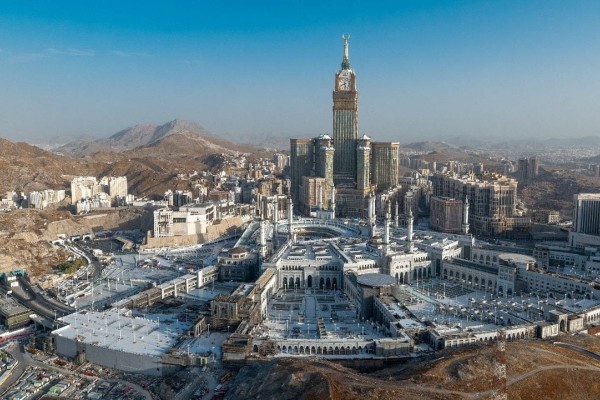
Saudi Arabia has begun work on King Salman Gate in Makkah, with up to 12 million square metres of floor area. The project will combine residential, hospitality, commercial and cultural uses and provide around 900,000 indoor and outdoor praying spaces.
The project aligns with Saudi Arabia’s target of welcoming 30 million pilgrims annually by 2030. Public Investment Fund(PIF) launched the project in October 2025 and positioned it as a major upgrade to Makkah’s central area.
Official project reports put King Salman Gate at up to 12 million square metres of gross floor area. The development will combine residential, hospitality, commercial and cultural uses and provide around 900,000 indoor and outdoor praying spaces. Project documents tie that buildout to Saudi Arabia’s target of welcoming 30 million pilgrims annually by 2030.
Project scale and access
King Salman Gate sits adjacent to AlMasjid AlHaram, north of the third expansion, with direct views and access to the AlHaram area.
RUA says the scheme will include about 50,000 residential units, up to 16,000 hotel keys and more than 200,000 square metres of retail space. Parking provision will reach about 30,000 cars.
All residential offerings will sit within walking distance of AlMasjid AlHaram. Hospitality stock will range from 4-star to 5-star plus hotels. Retail and dining space will serve both residents and pilgrims, while integrated transport hubs will connect the district with the wider city.
PIF outlined a second layer of the scheme when it launched the project last year. King Salman Gate will restore and develop about 19,000 square metres of heritage sites and link to public transport networks built to ease access to the Grand Mosque. That mix places mobility, accommodation and heritage preservation inside the same development zone.
Sales and delivery path
Public documents still leave several delivery points open. Reuters reported at launch that neither project cost nor completion timing had been disclosed.
RUA’s own FAQ repeats that line on the programme, noting that more detail on the timeline and sales phase will come as development progresses.
Commercial positioning is already clearer. RUA says King Salman Gate will be open to Muslims worldwide and aligns with Saudi rules on real estate ownership by non-Saudis.
Public access will extend across hospitality and retail assets, giving the district a wider operating base than a pure residential scheme.
PIF has attached a large employment number to the project. The King Salman Gate will generate more than 300,000 jobs by 2036, tying the development to the Pilgrim Experience Program and the broader Vision 2030 buildout around tourism, infrastructure and urban services.
Pilgrim demand shapes the buildout
RUA’s project FAQ says Makkah already receives more than 20 million pilgrims and visitors a year. That demand explains the heavy allocation to prayer space, hotel stock, housing, walkable access and parking. King Salman Gate is being built as a capacity project first and a real estate play second.
That operating logic matters. Makkah’s accommodation stock must absorb peak religious traffic without cutting access to Al-Masjid Al-Haram.
King Salman Gate answers that requirement with a dense mixed-use plan beside the mosque, direct pedestrian links, integrated mobility and publicly accessible services that can carry both visitor flow and resident demand.
MEED’s report indicates site works have begun. Publicly available information does not yet identify contract packages or major contractors. What is clear is the project’s scale.
King Salman Gate will rank among Makkah’s largest active urban developments, with delivery focused on prayer capacity, hospitality stock, transport access and heritage restoration around Islam’s holiest site.
King Salman Gate will be open to Muslims worldwide and aligns with Saudi rules on real estate ownership by non-Saudis